Book of Mormon Stories Song Piano Easy
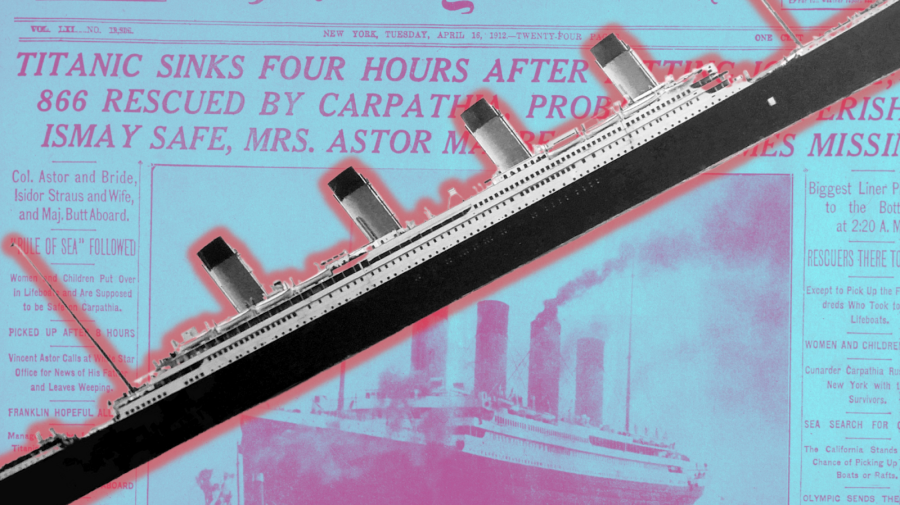
The sinking of The RMS Titanic is, without a doubt, i of the defining events of the 20th century. Almost immediately, the story captured the attention of people effectually the world. It'southward a story of hubris ("The boat is unsinkable," said Philip Franklin, vice president of White Star Line in 1912), but it's also a story of sacrifice and heroism (Major Archibald Butt, for example, and endless others died helping others survive).
Songs take been a major part of the cultural feel and remembrance of the Titanic. The tragedy has been immortalized in song numerous times over the 110 years since the ship's sinking. From Leadbelly's "The Titanic," to Blind Willie Johnson's "God Moves on the H2o," to Bob Dylan's much more contemporary "Tempest," the famous sunken send is an irresistible subject.
There are other musical associations: Celine Dion'south megahit, "My Heart Will Go On," from the soundtrack to James Cameron'south 1997 blockbuster, Titanic, and the hymn, "Nearer My God to Thee," which was famously the declared last vocal played past the band on the ship itself. But the vocal that is perhaps most closely associated with the tragic effect is a tune that's thought to have been written by William and Versey Smith, a married man and wife religious blues duo from either Texas or The Carolinas. Chosen "When That Great Ship Went Down," it'due south been covered and performed by endless musicians and summer camp attendees over the by century or and so — but why?
Attitudes About the Sinking Ship
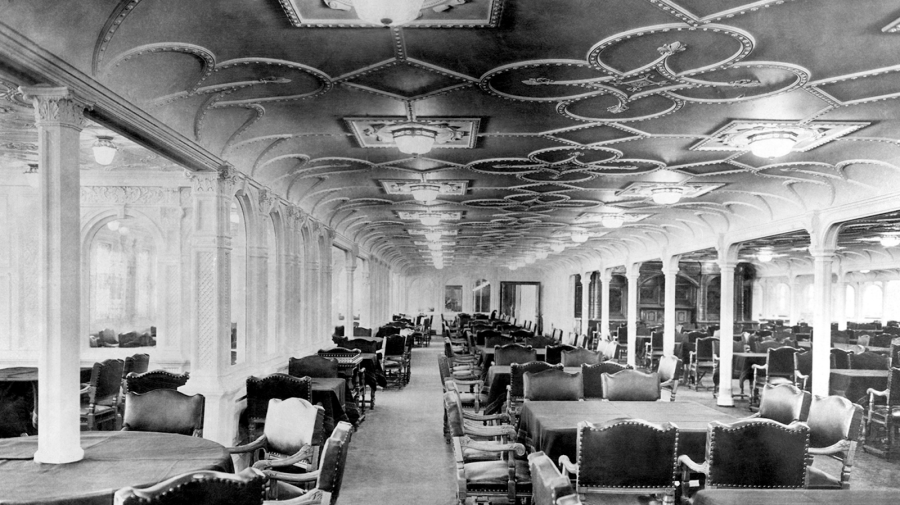
There was, of form, a neat deal of mourning following the news that the "unsinkable" send had, in fact, sunk. The loss of life was staggering; over 1500 people died — far more than survived. For Black Americans, at that place was some irony here. William and Versey Smith's 1927 recording of "When That Great Ship Went Down" is featured in the famous 1952 Harry Smith Anthology of American Folk Music, and the liner notes explain that Black musicians "found it noteworthy and ironic that company policies had kept Blackness [people] from the doomed send; the sinking was likewise attributed past some to divine retribution."
Divine retribution or not, as Henry Louis Gates points out, statements similar the one in the Washington Post from 1912 — that much of the sadness of the tragedy was due to "the graphic symbol and importance of many of those who sank" — landed such that they "practically dared African Americans to insert themselves into the Titanic narrative." In fact, there was a Black man on the Titanic, Joseph Laroche, whose story is interesting in and of itself, but that wouldn't exist widely known until much, much later.
In the moment, Black Americans attempted to situate themselves in the story through myth and commentary. Gates describes the popular rumors of the day, one of them that the famous boxer Jack Johnson had tried to board the Titanic merely was refused entry because of the color of his skin (this myth was immortalized in the Leadbelly song mentioned above).
Ballads like Leadbelly's and the i past William and Versey Smith were another fashion for Black Americans, suffering so many tragedies of their own, to comment on their absence from this item case of cultural mourning. During the earlier era of slavery, as Kenyatta D. Berry points out, "Music was a way for [enslaved people] to express their feelings whether information technology was sorrow, joy, inspiration or promise." This tradition of expression through music is a fundamental role of the experience of Black ballads well-nigh the Titanic, specially "When That Great Ship Went Down."
Singing in Sadness

The idea that singing might be a manner to cope with sadness should probably be no great revelation, but it can feel a trivial jarring when you're singing and then realize what's going on in the words you're saying. The famous chorus of "When That Great Transport Went Down" goes: "It was sad when that peachy ship went down / It was deplorable when that great send went downwardly / Husbands and wives and little children lost their lives / It was deplorable when that great transport went down."
If that feels distasteful to you, I tin can't quite blame you, merely I've ever felt a kind of rush in the disconnect between the meaning of the words and the feeling of the song. To sing such devastating truth then joyously is, perhaps, a little cathartic — a way of taking back a piffling ability in the face up of a universe that tin can seem cruel sometimes.
I recently wrote about National Poetry Calendar month that sometimes verse tin can evangelize information yous didn't know y'all needed. It is much the aforementioned with songs; information technology can be tempting to think that it's the words themselves that contain the information, but that'south not the whole truth. How we experience is a mysterious combination of the words, the sounds, and what's already in our hearts.
Source: https://www.ask.com/culture/story-of-the-song-titanic?utm_content=params%3Ao%3D740004%26ad%3DdirN%26qo%3DserpIndex&ueid=805b0761-6017-4a7c-b6d3-5a77e381a9f4
0 Response to "Book of Mormon Stories Song Piano Easy"
Post a Comment