How Long Does It Take for a Woman to Heal After Having a Baby
Parenthood was once thought to be inevitable — a destiny — for healthy fertile adults.
No more. Many people are opting out, a life selection that still provokes debate.
The number of babies built-in in the U.S. concluding year fell to the lowest level in 32 years, with younger women especially having fewer kids. Americans are now having fewer children than it takes to replace the population, a trend mirrored in other countries.
Information technology doesn't surprise Amy Blackstone, a folklore professor at the University of Maine and author of the new book, "Childfree past Choice: The Motion Redefining Family and Creating a New Historic period of Independence."
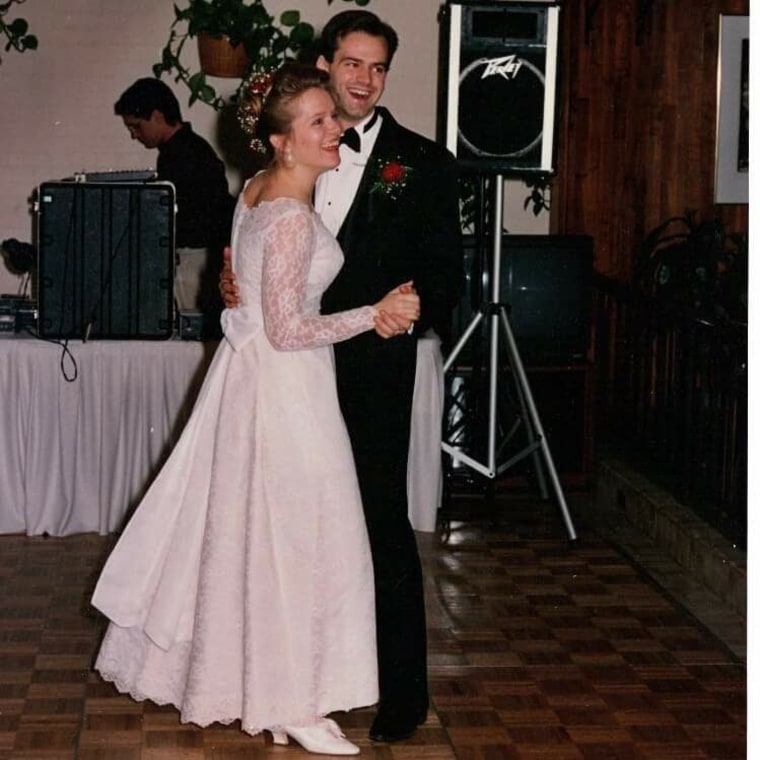
She and her husband Lance decided not to have children years ago subsequently simply not feeling the pull towards parenthood. They cheque in with each other every year to make sure they're still both on board about opting out. Famous women who've likewise made the selection include Ina Garten, Cameron Diaz and Helen Mirren.
For her book, Blackstone interviewed 70 kid-free men and women and surveyed more 700 about their experiences. She found women however feel the brunt of the stigma.
"Men sort of get a pat on the back and there's more joking about, 'Aren't you lucky that y'all dodged this bullet?'" Blackstone, 47, told TODAY.
"Whereas for women, it'due south the, 'Oh, yous poor thing, I can't believe you're missing out on the most meaningful experience that a woman can take. You must be so sad and solitary.'"
Here are eight more than of her findings:
1. Many of the top reasons for skipping parenthood are particularly true for millennials
Blackstone: The cost of living and having a baby — we know that's a particularly difficult issue for millennials who are facing all kinds of college debt. Certainly, having a child has an impact on the environment and I know that'southward a reason that millennials have shared for their option.
Other tiptop reasons include the desire for autonomy, spontaneity, freedom and the power to travel.
2. Many kid-free people want to focus on the relationships they already take
Blackstone: This quote from a 44-year-one-time married adult female resonated for me: "I worry that if I had a child I'd become a terrible partner because I'd be then focused on beingness a good parent."
This doesn't mean child-free people necessarily accept perfect relationships or better relationships than parents. But in my own case, I practice recognize that I would be giving something upwards in terms of my ability to feel close with my partner and nurture that human relationship.
3. It's not a 'selfish' choice
Blackstone: In 2015, Pope Francis said, "The choice to non have children is selfish."
If we're going to put that characterization on the child-complimentary, then it's a label that needs to be shared across any group of people who've made a choice virtually the life that they know is right for them.
But isn't that what nosotros're all doing? Even parents, if you inquire them why they had children, would tell yous that they wanted kids because that's the life that they envisioned for themselves.
Alternatively, we can cull to carelessness the "selfish" label and make up one's mind it's OK for people to make a life choice that is best for them, whether that be parenthood or non-parenthood. Maybe neither choice is selfish.
There's an impression that child-free people don't give back, or aren't giving to their communities or making a difference in the world. Frankly, zip could be further from the truth. Nosotros know from research that the child-free are involved in their communities — they're about as likely as parents to volunteer.
4. Many child-free people do like kids
Blackstone: A quarter of the kid-free people I interviewed actually chose careers that require them to be involved and make a difference in children's lives. Many of them are teachers, social workers, pediatricians. In that location are all kinds of means the kid-free are engaged in kids' lives and fabricated a choice to practice that.
Some child-free people don't like children and in that instance, the last thing we want to do is push them into becoming parents.
5. Child-complimentary people don't accept regret downwardly the road
Blackstone: I have non talked with anyone who feels regret near their pick.
I have had family members who I know have been worried for me, but we should accept when people tell us they don't desire to have children. Parenthood is a role that is all-time fulfilled when it'due south one that's chosen. It takes a lot to exist a good parent so if somebody doesn't experience that pull, that's perfectly OK.
6. Kid-free people are fulfilled and happy
Blackstone: When people say nosotros are missing out on something, that'due south absolutely true. But I would also turn it around and say it's possible that parents are missing out on some aspects of the lives that child-free people savor. We tin can't do information technology all — it's impossible to accept every life experience.
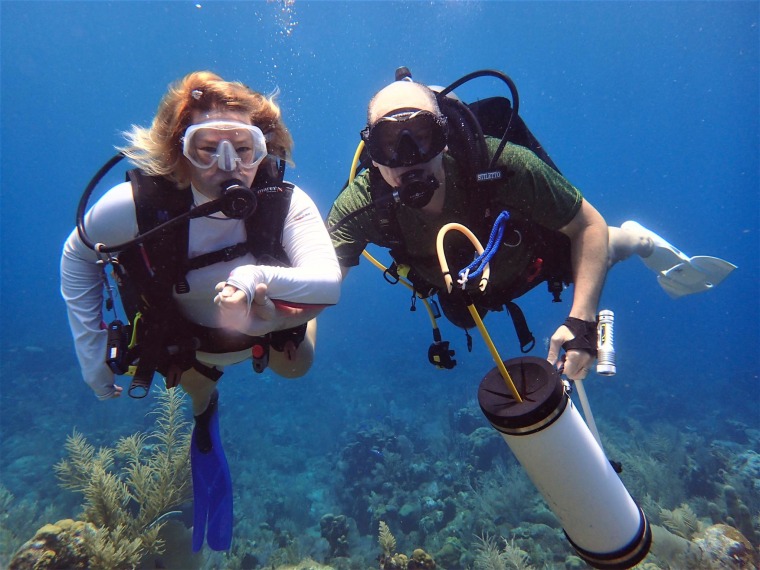
And then yes, we volition miss some experiences, just I don't think that considering that is true, that it necessarily follows we're unhappy. I'1000 very happy with my decision. My husband and I have a life that we beloved.
7. 'Who volition care for you in one-time age?' and 'Won't you exist lone?' are questions for everyone
Blackstone: These are questions that we all should be thinking virtually as we age, whether we have children or not.
In terms of the kid-free, many have been creating a nest egg to help them exist able to provide for themselves in their old age. And we're seeing more and more examples of "The Golden Girls"-style living where older adults are sharing households with each other.
It's a mistake to assume having children means one will accept a person to treat them in their one-time age. Not every adult child cares for their aging parents, research shows.
8. A child-gratuitous household is a family
Blackstone: I would love it if we came to empathise that the child-free accept families. I count my husband and me equally a family.
Child-gratuitous families fulfill the aforementioned functions that families with children practice. We create households as a safe space that provides an emotional connection and an opportunity to recharge. Nosotros engage in "social reproduction," which involves anything that people practice to aid rear the next generation. For the kid-gratis, that means being mentors and friends to children.
How Long Does It Take for a Woman to Heal After Having a Baby
Source: https://www.today.com/health/why-aren-t-millennials-having-kids-8-insights-child-free-t155804
0 Response to "How Long Does It Take for a Woman to Heal After Having a Baby"
Post a Comment